 “And right away her gaze went hard with the anger we always feel at the person who spoils our idea of ourself.”
― Trust Exercise
You’d think that after more than a decade of writing this blog, I’d have it down to a science. I’d have a workflow, a system, maybe even an intern with a journalism degree. You’d think I’d be churning out posts every Friday like clockwork.
Yeah, not so much.
This week’s post is late—Saturday instead of Friday—and there’s a reason for that. Several, actually. Parenting, repairs, real life. The stuff that always seems to show up just when you think you’ve got a free moment. So here we are.
Parenting and Plumbing
First off, nobody tells you how much time being a parent takes—not in a way that prepares you. They tell you it’s hard. They tell you it’s rewarding. But they don’t tell you that it’s constant. You think they’ll need you less as they grow. In truth, they just need you differently—and often more.
Balancing parenting with the other roles in our lives—spouse, employee, writer, neighbor, citizen—is a feat worthy of a circus tent. And if you’re parenting a young child, buckle up. You’re just getting to the part of the roller coaster where the clinking sound turns to screams.
I’m somewhere in the middle loops right now. Been through some highs, seen the gut-turning lows, and have come to accept that survival is possible. Still, as I glance toward the future, the ride’s finale looks intimidating. The end isn’t here yet, but it’s visible, and that’s a whole new kind of nervous.
This past week, in between work and school paperwork, we replaced a toilet (long overdue) and a thermostat (may it rest after 10 faithful years). My son, seeing the workers arrive, asked if I knew how to install a toilet. I told him yes—which is exactly why I called someone else to do it.
For the record: Lee Company handled the job. Reliable, affordable, courteous—the opposite of the governor they share a name with. Kudos where they’re due.
Of Lawsuits and Leadership
Now, onto the meat of this post—the part that might make some folks uncomfortable. Good. We should all be a little uncomfortable when $6.5 million in taxpayer money disappears into a lawsuit settlement, with very little in the way of public reckoning.
Let’s talk about Metro Nashville Public Schools (MNPS), the persistent myths around funding and accountability, and how one person’s unchecked actions cost this city dearly.
It’s popular in education policy circles to beat the “more money” drum while simultaneously banging away on the “accountability” cymbals. But here’s the truth: unless you’re a student or a teacher, accountability in education is mostly fiction. It exists in PowerPoint decks and mission statements, not in practice.
I’ve been writing about this stuff for over a decade. Here’s what I’ve learned: school districts usually have money. The issue is how they choose to spend it.
If a superintendent wants something done, miraculously the funds appear—even as they claim poverty. And nothing demonstrates that better than the recent $6.5 million lawsuit settlement involving five longtime MNPS administrators.
A Lawsuit We Should Have Seen Coming
The lawsuit reads like a case study in bad leadership, retaliation, and misused authority. It’s not about institutional failure; it’s about personal failure—specifically, that of Dr. Adrienne Battle, the current MNPS Director of Schools.
Here’s the short version: Five veteran administrators alleged they were pushed out of their jobs not for performance reasons, but because they crossed Battle or got caught in the wake of her personal entanglements.
One administrator questioned a Black History Month lesson that made national news. Others recommended disciplinary action for Battle’s brother, Carlton Battle—a coach involved in a physical altercation with a parent. One had a cousin suing the district. Another had flagged grade falsification, which is a felony in Tennessee.
These weren’t vague allegations. A 2023 summary judgment laid out the details plainly. Any school board or city council member doing even basic diligence could have seen the financial risk of going to trial. And yet, Battle seemed determined to defend herself all the way to court, where proceedings were set to begin July 22.
What Really Happened
Let’s go back to 2018. Adrienne Battle was on maternity leave from her position as a community superintendent. She attended a basketball game as a spectator where her brother, Carlton, was coaching.
After the game, a parent—upset that his child hadn’t played—reportedly pounded on the locker room door demanding to speak with the coach. A physical fight broke out. Carlton and his best friend (also present) got involved. Then students joined in. Chaos ensued. According to the lawsuit, “the coach beat up the parent,” and then fled the premises.
A fellow community superintendent, Damon Cathey, tried to address the situation professionally. Battle’s response? “No one is going to punk my brother.” Not exactly the tone you want from someone aspiring to lead a school district.
Even if Battle was not on leave, the school was not in her quadrant of respoinsibility.
Following that incident, Battle’s demeanor reportedly turned cold toward her colleagues. Some received threats. Some feared for their jobs. All were eventually demoted or dismissed. Meanwhile, Battle ascended—first to interim superintendent, then to the full-time role in 2020.
And guess what? Carlton Battle still works in MNPS, now through a nonprofit contracted with the district. He was even answering phones during a school shooting at Antioch High this year. Let that sink in.
No Checks, No Balances
The lawsuit settlement will reportedly pull $4 million from MNPS’s operating budget. So much for not having the funds to avoid that looming property tax hike, huh?
As part of the settlement, the remaining plaintiffs still employed by the district will resign. That means MNPS loses five veteran administrators—at a time when we’re already struggling to find qualified staff—because they dared to hold the superintendent accountable.
Had Battle been a teacher, this would have gone differently. She would’ve been counseled into early retirement—standard protocol when you embarrass the district. But instead, she got a $100,000 raise six months ago. That’s right: while this lawsuit loomed over the district like a dark cloud, the board rewrote her contract to give her more money and longer job security.
Why? They feared losing her.
But let’s be real: What employer in their right mind is going to poach a superintendent with a multi-million-dollar trial on the docket?
The board could have—should have—waited. At the very least, they could’ve said, “Let’s see how this lawsuit plays out.” But no. They handed her a bonus and let the taxpayers foot the legal fallout.
The Illusion of Transparency
The upcoming board vote to approve the $6.5 million settlement is tucked at the bottom of the consent agenda—meaning it’s unlikely to be publicly discussed. The real deliberation will happen behind closed doors. Unless a board member pulls it for open discussion (don’t hold your breath), it’ll pass quietly, buried in bureaucratic process.
This is accountability in name only. And unfortunately, it’s the norm.
When teachers seek better working conditions or cost-of-living adjustments, they’re told there’s no money. But somehow, there’s always money for lawsuits, raises, and ribbon-cuttings.
TCAP Results Are In
On a related note: parents, your child’s TCAP results are now available via the state’s family portal. You’ll need your credentials, but once inside, you’ll be able to compare your child’s performance against district, state, and national averages, and see breakdowns by subject.
Just remember: it’s one data point on one day. It’s useful, but not definitive.
Who’s Still Reading ChalkbeatTN?
Since Marta retired, I’ve found myself reading ChalkbeatTN less frequently. That’s not a knock on the new writers—they’re fine—but Marta had a depth of institutional memory that made her reporting richer. I’m sure the current team will grow into that role, but right now the reporting lacks the texture that only time can provide.
A Shiny New School
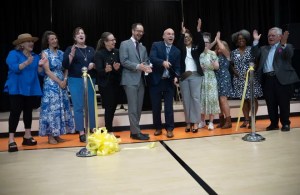 This week, MNPS held a ribbon-cutting for a new elementary school. It’s beautiful, spacious, and full of modern touches—expanded pre-K, a multi-use gym, flexible furniture, and charging stations.
Dr. Battle was there, naturally, praising community members who helped raise $5 million to make the gym possible.
It’s a lovely story, and the photos from the event say a lot—particularly about the demographics of the families the school serves. We talk about diversity a lot. Just not when it’s inconvenient.
Sometimes Losing is Winning
In Madison County, the much-contested Madison Classical Academy has withdrawn its charter application. It would have been the district’s first public charter school, but thanks to community pushback, limited real estate, and funding issues, the American Classical Education group pulled the plug.
They’ve chosen to focus on their Rutherford County campus instead.
The Madison County school board will now review a new application for a proposed K–6 charter called Jackson Museum School. The outcome there feels fairly predictable, but we’ll see.
If I were advising Madison Classical Academy? Drop the charter route. Go private. It’s less of a headache, and thanks to Tennessee’s voucher program, the money still follows.
Testing in Transition
If you can’t find any SCORE (State Collaborative on Reforming Education) folks in Tennessee this week, check Texas. Lawmakers there are considering eliminating their statewide standardized test, STAAR.
There’s growing consensus—nationwide—that while assessment is necessary, how we assess students needs major overhaul. Teachers want actionable, relevant data, delivered quickly. Parents want clarity, not complexity. Students deserve tests that reflect what they’re actually taught—not just what’s easy to grade by machine.
Tennessee lawmakers are currently holding a summer study session to explore these very issues. Maybe, just maybe, we’ll finally move away from punishment-based testing models toward something more meaningful.
In Closing
If you’ve read this far—thank you. If you find this work valuable, please consider subscribing via Substack. There’s a free version and a paid one. The latter helps me buy coffee… and maybe cover the plumbing next time.
💵 Venmo: @Thomas-Weber-10
💵 Cash App: $PeterAveryWeber
If you’ve got tips, ideas, or just want to vent, you can always reach me: Norinrad10@yahoo.com
Till next time, friends. Buckle up. The ride continues.
Categories: Education
 Dad Gone Wild
TDOE has lost a lot of high profile people over the past few weeks: Shannon Gordon, Jack Powers, Amy Owen, Brian Blackley. Commissioner Reynolds was not present in today’s Education Innovation meeting, and she hasn’t been at a State Board meeting in a while.
Has Jack gone back ExCelinEd?