 “I possess a device, in my pocket, that is capable of accessing the entirety of information known to man. I use it to look at pictures of cats and get into arguments with strangers.”
― Curious: The Desire to Know and Why Your Future Depends On It
It has been a long, strange week.
Between the ice storm in Nashville and the ICE storm in Minneapolis, it feels like the entire country is walking around with its shoulders up around its ears — braced, brittle, ready to snap.
In Nashville, the weather has been the kind of thing you only see once a generation. For more than a week now, the city has been hamstrung by a storm that dumped upward of three-quarters of an inch of ice — not snow, not sleet, but that quiet, heavy glaze that turns trees into weapons and power lines into liabilities.
Even as I write this, roughly a thousand people remain without electricity. Nights are dipping into the low teens. Schools are closed. Roads are still suspect. Normal life is suspended.
Predictably, Nashville Electric Service has come under fire.
Few of us have any real experience with power grids or the logistics of restoring service after an ice event of this magnitude. We don’t know how many downed lines are tangled together, how many poles snapped under accumulated weight, or how many repairs can safely be made before daylight. But that hasn’t stopped us from making confident pronouncements about what NES should be doing.
What often gets lost in that noise is that fellow Nashvillians — linemen, technicians, support crews — have been out in the same sub-freezing temperatures, working twelve- to fifteen-hour shifts, trying to restore power neighborhood by neighborhood. They’re not abstractions. They’re people.
But crises have a way of becoming vehicles for personal bias.
Some have accused the electric company of giving preferential treatment to certain racial or income groups, despite a lack of evidence. On the other side, critics have pointed to the company’s commitment to Diversity, Equity, and Inclusion — including 102 DEI trainings last year — as proof that priorities are misplaced, that time and money would have been better spent preparing for a once-in-a-lifetime storm.
Neither side seems particularly interested in budging. And while the arguments rage, crews keep working.
Adding to the oddness, Nashville’s mayor has chosen to communicate critical city information primarily through BlueSky, while largely ignoring Twitter — a platform still used by a substantial portion of the city. It raises an uncomfortable question: whatever happened to being mayor for everyone?
That question about representation and responsibility hangs in the air far beyond Middle Tennessee.
Because in Minneapolis, the story is darker, louder, and far more permanent.
There, an intensified presence of immigration enforcement has put communities on edge and has already resulted in the loss of life. Within seconds of the shootings, people rushed — as they always do — to make pronouncements shaped almost entirely by political leanings.
Some saw murder.
Some saw justified action.
No one failed to recognize it as tragic.
A few of us tried to slow down. To read. To wait. To let facts catch up to outrage.
When it emerged that the second individual shot, Alex Pretti, was carrying a concealed weapon at the time of the incident, I found myself returning to a point I’ve made for my entire adult life.
I’ve never chosen to carry a concealed weapon because, in my mind, there are only two possible outcomes: you shoot someone, or someone shoots you. I’m not comfortable with either.
I’ve been in plenty of rough situations. I’m an addict — remember — so chaos and danger aren’t abstract concepts to me. But never once have I been in a situation where a gun would have made things better. More often than not, it would have made things infinitely worse. This week, that argument was unfortunately borne out.
Early in my time in Nashville, I was coming out of a bar on Elliston Place around 2 a.m. when a police car pulled up. I made a remark that I found funny. The officer did not.
Moments later, I was slammed against the car, cuffed, and taken to the county jail, where I cooled my heels for the next four hours. When friends arrived to pick me up, I was released with a warning: next time, the “smart-ass Yankee” should keep his mouth shut.
Police don’t take kindly to disobedience.
That wasn’t the only time in my life that law enforcement and I ended up on opposite sides of a conversation. They have a way of making sure you understand the pecking order — tight handcuffs, not letting you duck your head getting into the back of a cruiser — small, deliberate lessons designed to linger.
That experience has stayed with me — not as a grievance, but as a reminder of how quickly situations involving authority, fear, and ego can spiral.
I’m not sharing this to add evidence to one side or the other. I’m sharing it to push back against those who immediately framed the Minneapolis shooting as a pure Second Amendment issue.
Yes, it is absolutely your right to carry a concealed weapon. But just because something is a right does not make it prudent.
The First Amendment works the same way. I have the right to say whatever I want. That doesn’t mean I always should.
Somewhere along the way, we lost the distinction between can and should.
Police interventions are inherently chaotic. They are charged with fear, adrenaline, and misinterpretation. Watching the video from both Minneapolis incidents, it’s hard not to see bad decisions on multiple sides — decisions that compounded into irreversible outcomes.
And yet, what troubles me most is how quickly we dehumanize everyone involved.
We forget that at the core of both Nashville and Minneapolis are people trying to do their jobs. Linemen restoring power. Agents enforcing federal law. Protesters, too, acting out of a belief that they are doing what is right — even when their actions collide with others doing the same. None of that absolves mistakes. But it matters.
We also dehumanize immigrants when we insist they must be either criminals or saints. It’s a modern version of the “noble savage” trope, and it’s just as dishonest.
There’s a saying in AA: If you like every drunk you meet, you haven’t met enough drunks.
It’s crude, but it’s useful. It reminds us that people are complicated, contradictory, and capable of both kindness and harm — sometimes in the same afternoon.
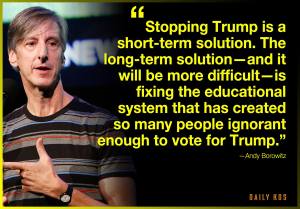 Toward the end of the week, I came across a meme that struck me, though it probably shouldn’t have. It’s been circulating in some form since 2016, and once again it managed to lay a broad set of societal failures at the feet of schools and teachers.
It also illustrated what passes for critical thinking these days.
Everybody claims to support questioning — right up until the questions lead somewhere unexpected.
I’ve been railing against this since I saw Jello Biafra speak at Penn State in the 1980s. He preached the importance of an open mind, then immediately outlined the conclusions that open mind should arrive at. The contradiction wasn’t subtle.
The problem has only worsened since then.
Instead of encouraging people to question everything, we increasingly insist that only questions which reinforce our existing political beliefs are acceptable. Ask anything else and you’re immediately “one of them.” Unless you ask hard questions of both sides — in which case, you’re despised by everyone.
We no longer create new ideas. Like our movies and music, we recycle tropes. Everyone’s a Nazi. Everyone’s on “the wrong side of history,” a phrase I’ve never understood. If anyone could reliably predict how history will judge us, there’d be a lot of money to be made in that.
Instead of new voices, we get a 75-year-old Springsteen with another throwback anthem. A 60-year-old Green Day still raging about American idiots. The more things change, the more they stay exactly the same.
I don’t know whether our lack of critical thinking fuels modern media, or whether modern media has hollowed out our ability to think critically. Probably both.
Gone are the days when journalists primarily conveyed facts. In their place are entertainers masquerading as news figures, feeding us versions of reality tailored to our biases.
The message I’ve tried to convey to my kids is simple: when you read articles or watch stories that describe participants as “domestic terrorists,” “moms,” or “ER nurses,” someone is trying to steer you emotionally instead of informing you.
Why is it relevant that Pretti was an ER nurse? Or that Good was a mom? Would the outcome have been less tragic if Pretti had owned a strip club or if Good were childless?
Once again, we reduce people to stock characters.
Pretti may well have been a compassionate ER nurse. He was also capable of an angry outburst that resulted in him kicking out the taillight of a federal vehicle. Both things can be true. Like all of us, he was complicated. And like most of us, he didn’t deserve to die prematurely.
Johnny Rotten once argued that the media turned Sid Vicious into a cartoon — an icon stripped of complexity, rendered useful precisely because he could no longer answer back. His critique wasn’t about punk rock so much as process: how institutions simplify people once they are silent.
We see the same dynamic after high-profile shootings. Long before investigations conclude, victims are flattened into symbols — stand-ins for arguments, proxies in larger debates. What’s happening with Pretti fits that pattern. The narrative is moving faster than verified information, and a human being is being reduced to a headline-sized version of himself.
It’s not malicious. It’s structural.
Systems built on immediacy and outrage have little patience for nuance, even when the stakes demand it.
Schools don’t have time to teach critical thinking the way we claim to want them to. Classrooms are no longer safe places to ask uncomfortable questions — assuming there’s time to ask questions at all. Pacing guides exist to ensure everyone is on page five, paragraph seven, at the same moment. Curiosity is inefficient.
Schools have increasingly become vehicles for social change, which explains the endless battles over curriculum and content. Each side wants its worldview fortified, even if critical thinking is collateral damage.
Which brings me to Minneapolis again.
Why are schools there handing out whistles to parents to blow during ICE actions — whistles capable of producing sound levels that can cause hearing damage? I suspect the same people outraged by that would have no issue with it if it aligned with their politics.
“So what are you saying?” you might ask.
The same thing I’m always saying.
We have to learn to communicate better with each other.
We have to stop demonizing and flattening one another into stock characters.
We have to look for the humanity in our perceived enemies.
Now more than ever, we need more questions, not fewer — and we need the humility to change our minds as facts emerge. There should be no sacred cows.
Ask questions. But resist the urge to assign motives or intentions you can’t prove.
I love this country. If it’s destroyed, it won’t be because of a single person on the right or the left. It’ll be because you and I became rigid, stopped listening, and stopped questioning ourselves.
This isn’t how I intended this piece to turn out. But that’s part of the beauty of having your own blog — nobody can tell you what to write.
There are holes in my argument. The only way to find them is to put the thoughts out there and engage with other people. I’ve always believed that when entering a disagreement, you should have a desired outcome in mind — and consider what that outcome means for everyone.
Everyone has a war plan. Few people think about what peace looks like. What happens to your perceived opponents? Is there a way for them to retreat with dignity?
Important questions. Rarely asked.
I pray that next week brings healing to Nashville. As of today, more than twenty MNPS schools still lack electricity, many dealing with flooding on top of it all.
We have a long way to go before things feel normal again.
And maybe that’s the point. Normal, as we’ve been practicing it, defaults to reflex — outrage before understanding, certainty before facts, symbols before people. Whether it’s a lineman on a pole, an agent enforcing the law, a protester acting on conviction, or a man reduced to a headline after he’s gone, we keep reaching for simple stories to explain complex moments. Storms — literal and political — expose systems under strain, but they also expose us: how quickly we assign blame, how eagerly we flatten one another, how uncomfortable we are sitting with uncertainty. If there’s a way forward, it likely begins there — slowing down, resisting easy narratives, and remembering that most people involved believe they are doing the best they know how, even when the outcomes tell a harder story.
This isn’t corporate media.
There’s no team.
No budget.
No handlers.
It’s just me — trying to keep up, trying to keep you informed, and trying to say what others won’t.
If you value that work:
Venmo: @Thomas-Weber-10
Cash App: $PeterAveryWeber
Tips: Norinrad10@yahoo.com
Until next time:
Accountability begins with accuracy — and with listening to the people closest to the work.
Categories: Education
 Dad Gone Wild
Leave a comment